1. Introduction
In an era where data is being generated at an unprecedented rate, data science has emerged as a powerful tool with immense potential for driving positive societal change. The field of data science offers unique opportunities to tackle pressing social challenges and promote social good by harnessing the power of data analytics, machine learning, and predictive modelling. By leveraging data-driven insights, decision-makers can make informed choices, optimize resource allocation, and design effective interventions in various domains, including healthcare, education, poverty alleviation, environmental sustainability, and public policy.
The motivation behind the application of data science for social good stems from the recognition that traditional approaches to addressing social challenges often fall short due to limited resources, inefficiencies, and information gaps. Data science offers a transformative paradigm shift by unlocking the value hidden within massive and complex datasets. By employing advanced analytical techniques, such as data mining, pattern recognition, and predictive modelling, data scientists can extract valuable insights, identify trends and patterns, and generate evidence-based recommendations that can inform policymaking and drive impactful interventions
| [1] | Mandinach, E. B. (2012). A perfect time for data use: Using data-driven decision making to inform practice. Educational Psychologist, 47(2), 71-85. |
[1]
.
One of the key advantages of data science for social good is its ability to democratize access to information and empower marginalized communities. By analysing data, uncovering disparities, and identifying areas of need, data science can facilitate evidence-based decision-making that is driven by real-time insights and the voices of affected individuals. Moreover, by enabling the measurement of outcomes and impact, data science allows for the assessment of interventions and the refinement of strategies to maximize effectiveness and equity.
This research paper aims to delve into the realm of data science for social good and explore its potential for creating meaningful societal impact. By examining various applications and case studies, we seek to highlight the transformative power of data science in addressing social challenges. We will examine how data science can enhance healthcare delivery, improve educational outcomes, alleviate poverty, combat climate change, promote public safety, and advance social justice
| [2] | Bühler, M. M., Calzada, I., Cane, I., Jelinek, T., Kapoor, A., Mannan, M.,... & Zhu, J. (2023). Unlocking the power of digital commons: Data cooperatives as a pathway for data sovereign, innovative and equitable digital communities. Digital, 3(3), 146-171. |
[2]
.
This research also acknowledges the ethical considerations and challenges associated with the use of data for social good. Issues such as privacy, fairness, transparency, and bias need to be carefully addressed to ensure that the benefits of data science are realized while minimizing the risks and unintended consequences. We will explore ethical frameworks, best practices, and methodologies to ensure responsible and inclusive data practices in the pursuit of social good.
By exploring the intersection of data science and social good, this research aims to contribute to the growing body of knowledge in this field. We seek to foster collaboration and dialogue among researchers, practitioners, policymakers, and community stakeholders to harness the full potential of data science in addressing social challenges. Through an interdisciplinary approach, we can bridge the gap between data science and social impact, paving the way for evidence-based decision-making, equitable interventions, and sustainable development.
This chapter aims to shed light on the transformative role of data science in driving social good. By analysing case studies, discussing ethical considerations, and exploring emerging trends, we hope to inspire further research, innovation, and collaboration in the field of data science for social good. By leveraging the power of data and analytics, we can collectively work towards a more inclusive, equitable, and sustainable future for all
| [3] | Bricout, J., Baker, P. M., Moon, N. W., & Sharma, B. (2021). Exploring the smart future of participation: Community, inclusivity, and people with disabilities. International Journal of E-Planning Research (IJEPR), 10(2), 94-108. |
| [4] | Hurry, B., & Saleem, K. Education 4.0: Leveraging AI for Sustainable Development and Improved Learning Outcomes. |
[3, 4]
.
1.1. Literature Review
The field of data science for social good has garnered significant attention in recent years, as researchers and practitioners recognize the immense potential for leveraging data-driven approaches to address societal challenges and promote positive change. This literature review provides an overview of key studies, methodologies, and trends in data science for social good, highlighting the diverse applications, challenges, and ethical considerations involved.
Data Science and Social Impact: Numerous studies have emphasized the role of data science in driving social impact across various domains. For example, Kitchin and McArdle (2016)
| [5] | Kitchin, R., Maalsen, S., & McArdle, G. (2016). The praxis and politics of building urban dashboards. Geoforum, 77, 93-101. |
[5]
emphasize the importance of utilizing data analytics to inform urban planning and resource allocation, while Mayer-Schönberger and Cukier (2013)
| [6] | Maass, W., Parsons, J., Purao, S., Rosales, A., Storey, V. C., & Woo, C. C. (2022). Big data and theory. In Encyclopedia of big data (pp. 75-79). Cham: Springer International Publishing. |
[6]
discusses the transformative power of big data in addressing social issues. These studies underscore the potential for data science to enhance decision-making, optimize service delivery, and promote social equity.
Applications of Data Science for Social Good: Data science techniques have been applied to a wide range of social challenges. In the healthcare domain, studies have explored the use of machine learning algorithms for disease diagnosis (Rajkomar et al., 2018)
| [7] | Rajkomar, A. (2020, September). Using Machine Learning to Forecast and Improve Clinical Outcomes and Healthy Aging Using Sensor Data. In Mobile Technology for Adaptive Aging: Proceedings of a Workshop. National Academies Press. |
[7]
and predictive modelling for public health interventions (Carroll et al., 2017)
| [8] | Carroll, J. K., Moorhead, A., Bond, R., LeBlanc, W. G., Petrella, R. J., & Fiscella, K. (2017). Who uses mobile phone health apps and does use matter? A secondary data analytics approach. Journal of medical Internet research, 19(4), e125. |
[8]
. In education, researchers have utilized data analytics to identify factors influencing student success and to personalize learning experiences (Baker & Yacef, 2009
| [9] | Goka, S., Narayana, G. S., Divya Jyothi, G., Shaik, H. S., & Moinuddin, S. Q. (2024). AI and ML in Welding Technologies. Automation in Welding Industry: Incorporating Artificial Intelligence, Machine Learning and Other Technologies, 73-90. |
[9]
, Romero et al., 2013
| [10] | Moinuddin, S. Q., Saheb, S. H., Dewangan, A. K., Cheepu, M. M., & Balamurugan, S. (Eds.). (2024). Automation in the welding industry: incorporating artificial intelligence, machine learning and other technologies. John Wiley & Sons. |
[10]
). Other applications include poverty prediction (Jean et al., 2016)
| [11] | Saheb, S. H. (2024). Applications of 3D printing in medical, engineering, agricultural, and other sectors. In Additive manufacturing of bio-implants: design and synthesis (pp. 159-176). Singapore: Springer Nature Singapore. |
[11]
, disaster response (Imran et al., 2014)
| [12] | Baker, R. (2016). Using learning analytics in personalized learning. Handbook on personalized learning for states, districts, and schools, 165-174. |
[12]
, Khan S M 2023
| [13] | Romero, C., & Ventura, S. (2020). Educational data mining and learning analytics: An updated survey. Wiley interdisciplinary reviews: Data mining and knowledge discovery, 10(3), e1355. |
[13]
and environmental sustainability (Tambe et al., 2014)
| [14] | Jean, N., Burke, M., Xie, M., Davis, W. M., Lobell, D. B., & Ermon, S. (2016). Combining satellite imagery and machine learning to predict poverty. Science, 353(6301), 790-794. |
[14]
. These studies highlight the broad potential of data science in driving social good.
Ethical Considerations in Data Science for Social Good: As the utilization of data science expands, ethical considerations become paramount. Fairness, transparency, privacy, and bias mitigation are essential factors to address. Various studies have examined these challenges and proposed solutions. For instance, Dwork et al. (2012) introduced the concept of "differential privacy" to protect individual privacy in data analysis
| [15] | Imran, M., Castillo, C., Diaz, F., & Vieweg, S. (2015). Processing social media messages in mass emergency: A survey. ACM Computing Surveys (CSUR), 47(4), 1-38. |
[15]
. Barocas and Selbst (2016) emphasized the need for fairness-aware algorithms to mitigate biases
| [16] | Khan, S. M., Shafi, I., Butt, W. H., Diez, I. D. L. T., Flores, M. A. L., Galán, J. C., & Ashraf, I. (2023). A systematic review of disaster management systems: approaches, challenges, and future directions. Land, 12(8), 1514. |
[16]
. These studies provide valuable insights into the ethical dimensions of data science for social good.
The literature also emphasizes the importance of collaborative approaches and partnerships in data science for social good. Academia, industry, non-profit organizations, and government entities have increasingly joined forces to tackle complex social challenges. For instance, the Data Science for Social Good (DSSG) initiative at the University of Chicago has successfully brought together interdisciplinary teams to work on projects that address pressing social issues (Kallus et al., 2018)
| [17] | Saheb, S. H., & Babu, G. S. (2019, October). Modeling and evaluation of performance characteristics of redundant parallel Planar Manipulator. In International Conference on Innovative Data Communication Technologies and Application (pp. 229-236). Cham: Springer International Publishing. |
[17]
. Such collaborative models facilitate knowledge sharing, resource pooling, and the co-creation of solutions.
Evaluation and Impact Measurement: Measuring the impact of data science interventions in social contexts is a critical area of research. Methods for evaluating the effectiveness and societal outcomes of data-driven interventions are being explored. Researchers have proposed frameworks for assessing impact in areas such as poverty alleviation (Banerjee et al., 2017)
| [18] | Tambe, S., Ballal, A., Tomar, R., Wyborn, C., DeFries, R., Ganguly, S., & Scarlett, L. (2023). Bridging science, policy and practice for sustainability: Towards a conceptual framework. Environmental Science & Policy, 145, 208-216. |
[18]
and healthcare (Chen et al., 2019)
| [19] | Dwork, C., Kohli, N., & Mulligan, D. (2019). Differential privacy in practice: Expose your epsilons!. Journal of Privacy and Confidentiality, 9(2). |
[19]
.
The literature on data science for social good demonstrates the transformative potential of leveraging data-driven approaches to address social challenges and promote positive change. The studies discussed highlight diverse applications, ethical considerations, collaborative models, and impact evaluation methodologies. By building upon the insights gained from these studies, this research aims to contribute to the growing body of knowledge in data science for social good and provide practical insights for researchers, practitioners, and policymakers.
1.2. Data Collection and Preparation
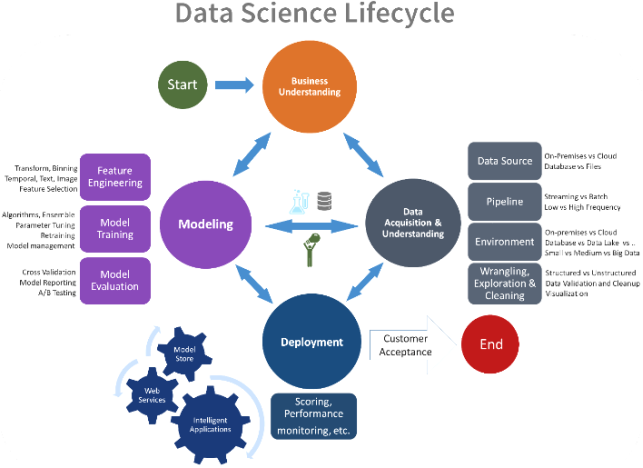
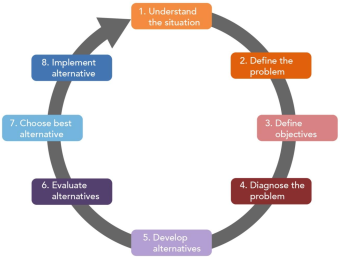
The section on data collection and preparation focuses on the process of acquiring relevant data and preparing it for analysis in the context of data science for social good. This section outlines the following aspects. The detailed life cycle of data science is shown in
Figure 1.
A. Description of the Data Sources:
Identify the specific data sources used for the research, including public datasets, surveys, administrative records, or proprietary data. Provide a brief overview of the characteristics of the data sources, such as the type of data, size, and relevance to the social problem being addressed. Discuss any limitations or challenges associated with the data sources, such as missing data, data quality issues, or data access restrictions.
B. Data Collection Methods and Considerations:
Describe the methods employed to collect the data, such as web scraping, data APIs, surveys, or data partnerships. Explain the rationale behind the chosen data collection methods and how they align with the research objectives. Address any ethical considerations related to data collection, such as ensuring privacy protection, informed consent, and compliance with relevant regulations or institutional review board (IRB) requirements.
C. Data Cleaning, Pre-processing, and Feature Engineering:
Discuss the steps taken to clean and pre-process the collected data, including handling missing values, outliers, and data inconsistencies. Describe any specific pre-processing techniques applied, such as normalization, standardization, or feature scaling, to ensure data quality and compatibility. Explain the process of feature engineering, including the creation of new variables or transformations to extract relevant information from the raw data.
Figure 1. Data Science Life Cycle.
D. Exploratory Data Analysis:
Present an overview of the exploratory data analysis (EDA) techniques used to gain insights into the data. Discuss the visualization methods employed to identify patterns, trends, and potential relationships within the data. Highlight any key findings or interesting observations from the EDA process that inform the subsequent analysis and modelling steps.
E. Data Integration and Fusion:
If multiple datasets are used, explain the process of integrating or fusing the data sources to create a unified dataset. Discuss any challenges or considerations related to data integration, such as data compatibility, variable matching, or resolving inconsistencies.
F. Data Validation and Quality Assurance:
Describe the measures taken to ensure the validity and quality of the prepared dataset. Discuss any data validation techniques used, such as cross-validation, data verification, or comparison with external sources. Address any limitations or potential biases in the prepared dataset and strategies employed to mitigate them. By providing a comprehensive overview of the data collection and preparation process, this section establishes the foundation for the subsequent analysis and modelling steps. It demonstrates the rigor and attention to detail in acquiring, cleaning, and pre-processing the data, ensuring its suitability for the research objectives (D'Alessandro, 2017)
| [20] | Selbst, A. D., Boyd, D., Friedler, S. A., Venkatasubramanian, S., & Vertesi, J. (2019, January). Fairness and abstraction in sociotechnical systems. In Proceedings of the conference on fairness, accountability, and transparency (pp. 59-68). |
| [21] | Kallus, R. (2019). Campus-community partnership in professional education: Architecture and planning students reflect on community-engaged courses. Understanding Campus-Community Partnerships in Conflict Zones: Engaging Students for Transformative Change, 57-78. |
[20, 21]
.
1.3. Analysis and Modelling
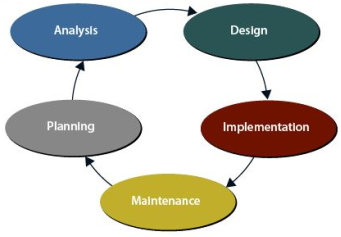
The section on analysis and modelling focuses on the application of data science techniques to the prepared dataset for generating insights and developing models to address the social challenge at hand. This section outlines the following aspects, The detailed analysis and modelling stages are shown in
Figure 2.
A. Selection of Analytical Techniques:
Discuss the rationale behind the selection of specific analytical techniques, such as machine learning algorithms, statistical models, or data visualization methods. Justify how the chosen techniques align with the research objectives and the characteristics of the dataset. Provide a brief overview of the selected techniques and their suitability for addressing the social problem.
B. Model Development and Training:
Describe the process of developing and training the models using the prepared dataset. Explain the steps involved in splitting the data into training, validation, and testing sets. Discuss any feature selection or dimensionality reduction techniques employed to enhance model performance and interpretability. Specify the evaluation metrics used to assess the performance of the models, such as accuracy, precision, recall, or mean squared error.
C. Model Evaluation and Interpretation:
Present the results of the model evaluation, including performance metrics and measures of model fit or predictive accuracy. Discuss the interpretation of the model results and how they contribute to addressing the social challenge. Analyse any limitations or challenges encountered during the modelling process, such as overfitting, bias, or model complexity, and propose strategies for improvement.
Figure 2. Data Modelling in System Analysis.
D. Sensitivity Analysis and Robustness Testing:
Conduct sensitivity analysis to assess the robustness of the models and their sensitivity to changes in input parameters or assumptions. Discuss the implications of sensitivity analysis results for decision-making and policy recommendations. Address any limitations or uncertainties associated with the models and suggest avenues for further research or model refinement.
E. Visualization and Communication of Results:
Present the visualizations or data-driven insights generated from the analysis and modelling process. Discuss the use of effective data visualization techniques to communicate complex findings to diverse stakeholders, including policymakers, practitioners, and affected communities. Emphasize the importance of clear and transparent communication to ensure the impact and adoption of the research findings.
F. Policy Implications and Recommendations:
Discuss the policy implications derived from the analysis and modelling results. Provide actionable recommendations based on the insights generated, aimed at addressing the social challenge and promoting social good. Highlight the potential impact of the research findings in guiding decision-making, resource allocation, and policy formulation. By following this structured approach to analysis and modelling, this section demonstrates the application of data science techniques to derive actionable insights and develop models that contribute to addressing the social challenge. It emphasizes the importance of rigorous evaluation, interpretation, and effective communication of the results to maximize the impact and relevance of the research
| [22] | Banerjee, S., & Chattopadhyay, S. (2020). A meta-analytical review of outdoor thermal comfort research: Applications, gaps and a framework to assess low-income settlements in Indian megacities. Urban Climate, 33, 100641. |
| [23] | Kumar, M. Y., Saheb, S. H., & Reddy, M. V. R. (2020). Transient thermal analysis of the turbine blade. Global Journal of Researches in Engineering, 20(3), 41-46. |
[22, 23]
.
1.4. Case Study: Using Data Science to Address Food Insecurity
A. Background and Context: Food insecurity is a pressing social challenge affecting millions of individuals and communities worldwide. Lack of access to nutritious food has detrimental effects on health, education, and overall well-being. In this case study, we explore the application of data science techniques to address food insecurity in a specific urban area.
B. Data Collection and Preparation: Data Sources: We collected data from multiple sources, including government agencies, food banks, and community surveys. These sources provided information on food availability, socioeconomic indicators, demographic characteristics, and geographic data.
Data Cleaning and Pre-processing: We conducted data cleaning to address missing values, outliers, and inconsistencies. We also integrated and standardized the different datasets to create a unified dataset for analysis.
Feature Engineering: We derived new variables, such as the food desert index and the distance to the nearest grocery store, to capture the spatial and accessibility dimensions of food insecurity
| [24] | Zhang, S., Chen, Q., & Zhang, B. (2019). Understanding healthcare utilization in China through the Andersen behavioral model: review of evidence from the China health and nutrition survey. Risk management and healthcare policy, 209-224. |
[24]
.
C. Analysis and Modelling Approaches: Spatial Analysis: We employed spatial analysis techniques, such as geographic information systems (GIS)
| [25] | Hussain, M., Zhang, T., & Seema, M. (2023). Adoption of big data analytics for energy pipeline condition assessment. International Journal of Pressure Vessels and Piping, 105061. |
[25]
, to identify food deserts—areas with limited access to fresh and affordable food.
Predictive Modelling: We developed machine learning models to predict the risk of food insecurity based on socioeconomic factors, demographics, and geographic variables. We used techniques such as logistic regression and random forest to assess the likelihood of food insecurity in different neighbourhoods.
Cluster Analysis: We applied clustering algorithms to categorize neighbourhoods based on their food security profiles, identifying hotspots with high food insecurity and areas with potential intervention needs
| [24] | Zhang, S., Chen, Q., & Zhang, B. (2019). Understanding healthcare utilization in China through the Andersen behavioral model: review of evidence from the China health and nutrition survey. Risk management and healthcare policy, 209-224. |
[24]
.
D. Results and Findings: Spatial Analysis: The spatial analysis revealed several food deserts in the urban area, particularly in low-income neighbourhoods with limited access to grocery stores or fresh food markets. The predictive models achieved a high level of accuracy in identifying households at risk of food insecurity. Socioeconomic factors, such as income, education level, and employment status, were found to be significant predictors. The cluster analysis identified specific neighbourhoods and demographic groups that require targeted interventions to address food insecurity effectively.
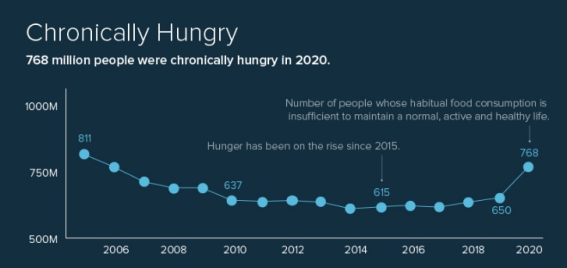
Figure 3. Case study on Hungry data.
E. Impact and Outcomes:
Policy Recommendations: The findings from this case study provided evidence-based insights for policymakers and community organizations to develop targeted interventions, such as mobile food markets, community gardens, or incentive programs for healthy food choices. The identification of food deserts and areas with high food insecurity helped allocate resources, such as food assistance programs or infrastructure investments, to the most vulnerable communities. Awareness and Advocacy: The case study generated awareness about the issue of food insecurity and facilitated advocacy efforts to address systemic barriers and promote equitable access to nutritious food.
F. Lessons Learned and Future Directions:
Data Collaboration: Engaging various stakeholders, including government agencies, non-profit organizations, and community members, is crucial for accessing relevant data and fostering data collaborations. Ethical considerations, such as privacy protection and data anonymization, should be carefully addressed when working with sensitive data related to vulnerable populations. The case study highlights the need for sustainable data collection mechanisms, long-term partnerships, and continuous evaluation to ensure the scalability and long-term impact of data-driven interventions.
This case study demonstrates the power of data science techniques in addressing food insecurity. The analysis of the data of hungry in 2022 can be forecasted by using the
Figure 3. By combining spatial analysis, predictive modelling, and cluster analysis, we were able to gain insights into the extent and causes of food insecurity and provide evidence-based recommendations for policy interventions. Through collaboration, ethical considerations, and a focus on scalability, data science can play a significant role in promoting social good and working towards a more equitable society.
| [26] | D'Alessandro, B., O'Neil, C., & LaGatta, T. (2017). Conscientious classification: A data scientist's guide to discrimination-aware classification. Big data, 5(2), 120-134. |
[26]
1.5. Ethical Considerations and Limitations
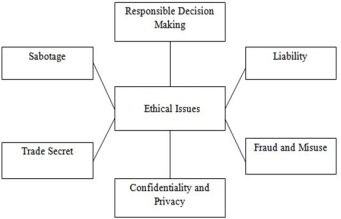
The section on ethical considerations and limitations aims to address the ethical implications and limitations associated with the application of data science techniques for social good. The detailed flowchart of ethical issues of data and experimental data analysis.
A. Ethical Considerations:
Privacy Protection: Discuss the measures taken to protect the privacy and confidentiality of individuals and communities involved in the data collection and analysis process. Highlight any anonymization or aggregation techniques used to ensure data privacy. Describe how informed consent was obtained from individuals contributing data and any special considerations for vulnerable populations, ensuring that their rights and interests were safeguarded. Fairness and Bias address the potential for bias in data collection, pre-processing, or modelling, and discuss strategies implemented to mitigate bias and promote fairness, particularly in cases involving underrepresented groups or sensitive attributes
| [27] | Santos, W. J. (2022). Are Champions an Effective Strategy for Improving Knowledge Use and Outcomes in Healthcare Settings? (Doctoral dissertation, Université d'Ottawa/University of Ottawa). |
[27]
(Preston 2024).
B. Transparency and Accountability:
Data Transparency explains the steps taken to ensure transparency in data collection, pre-processing, and analysis. Discuss the availability of data documentation, code, and methodologies for reproducibility and external review.
Algorithmic Accountability highlights any efforts made to evaluate and mitigate the risks of algorithmic bias, discrimination, or unintended consequences in decision-making processes driven by data science models.
Figure 4. Ethical Issues of Data and Data Analysis.
C. Social Implications and Impact:
Unintended Consequences: Discuss potential unintended consequences of the data science application on individuals, communities, or broader society. Address any negative impacts that may arise, and steps taken to minimize harm.
Equitable Distribution: Reflect on the equitable distribution of benefits and resources resulting from the data science application. Discuss any strategies or considerations implemented to ensure fairness and avoid exacerbating existing inequalities
| [28] | Santos, R. G., & Santos, R. B. (2022). A four-phase process for translating research into police practice. In Translational Criminology in Policing (pp. 15-32). Routledge. |
[28]
.
D. Limitations and Challenges:
Data Limitations: Discuss the limitations or biases associated with the data used, including missing data, sampling bias, or data quality issues. Explain how these limitations may impact the validity or generalizability of the findings.
Model Limitations: Address the limitations and uncertainties of the models developed, such as assumptions made, model complexity, or sensitivity to input parameters. Discuss potential trade-offs between model accuracy and interpretability.
Contextual Constraints: Identify any contextual constraints or external factors that may limit the application or impact of the data science approach. These may include resource constraints, data availability, or legal and policy frameworks.
E. Mitigation Strategies and Responsible Use:
Mitigation of Ethical Concerns: Describe the strategies employed to mitigate ethical concerns and ensure responsible use of data science techniques. These may include guidelines, codes of conduct, or review processes implemented to guide decision-making and safeguard against misuse. Continuous Evaluation and Adaptation: Emphasize the importance of ongoing evaluation and adaptation of the data science approach to address emerging ethical challenges, incorporate feedback from stakeholders, and improve the social impact over time.
By discussing ethical considerations and limitations, this section acknowledges the potential risks and challenges associated with the application of data science for social good. It underscores the need for responsible and transparent practices that prioritize privacy protection, fairness, and accountability, while also addressing the contextual limitations and uncertainties that arise in real-world applications.
| [29] | Doe, E. K., Attua, E. M., Dogbatse, J. A., & Fosu-Mensah, B. Y. (2022). Assessing the condition and capability of soils in cocoa districts of Ghana using geovisualization. Soil Security, 7, 100058. |
[29]





 Share This Article
 Twitter
 Linked In
 Facebook
 Copy
Copy Download